Review Summary: A deep dive into my favorite album.
A small, dilapidated chapel sits on the outskirts of the woods.
The town it once stood in service for has long since been occupied by ghosts, but the chapel still remains, albeit in ruins. The wooden floorboards creak and smell of month old rain, the beige walls have begun to peel apart and show cracks of dark drywall, and whatever chairs or pews still remain from being scavenged years ago lie in disarray. But a strong ray of light still beams from an upper window overhead; bits of white dust suspended in the air now visible through its glow. It's the only source of light in these ruins, but it's enough to bathe the whole room in a newly-dawn nostalgic light. Stepping inside, one asks if God still exists in this place of worship. The answer might very well be yes, but God never speaks, and the light beaming from the window is as suffocating as it is warm. It watches without blinking, the lidless eye of sun and God, judging fates with unknowable, inscrutable strictures.
And in the center of its gaze sits a singular red haired woman in her late twenties, fingers gliding across piano keys, while a bass guitar strums in the background and her voice whispers out, seemingly tugging to and from the woman at its core, as the light of this forgotten place casts its silent verdict for her fate.
"Every finger in the room...is pointing at me"
"Little Earthquakes" is my favorite album. Now I'm faced with the challenge of trying to articulate why.
My reasons for loving it are clear, but also dichotomous. The music here is stripped down and direct, yet grand on a mythic level. It's perhaps the most personally revealing album I have listened to by an artist while also being made inscrutable with ciphers that I'll never hope to fully understand. It stands triumphant as an inspiring work of art about moving upward and forward into the light while also being haunted with trauma and oppression that threatens to swallow one whole no matter how hard they scratch and scream against it. These seemingly contradictory ideas wrestle ceaselessly against one another in my mind every time I listen to this group of songs; an eel that always slithers out of my grasp when I think I have a handle on it.
So what does "Little Earthquakes" sound like? What's it about? And why do I personally hold it in the absolute highest regard; above any of the other hundreds of albums I have listened to and enjoyed over the years?
I won't delve too much into Tori Amos's personal life for review context here, but with such a personal record as this, a little bit of context for the uninitiated can provide some beneficial insight. Tori was a child prodigy, teaching herself how to play the piano at only a couple years old, creating her own compositions by the age of four, and at five years old was the youngest student ever admitted to the Peabody Institute for music. She later discontinued her studies there by age 11 due to her love of popular music pulling her away from the more classical compositions taught at the institute, but nonetheless her skill as a prodigal musical talent is evident on this record. Her father was a minister at a Methodist church, which is relevant for the thematic threads of her music I'll touch on later, and she spent about a decade honing her skills and sharpening her teeth in the music industry, paying her debts, piling pitfalls and rejections into an uncountable mound, before this debut single album skyrocketed her career into stardom.
By the time "Little Earthquakes" released she was already 28 years old. Most popular musicians get their big breakthrough at a much younger age, getting discovered at a point in life where their energy is matched by youthful naivete, but by this point Tori had accumulated enough wisdom and life experience to match her boundless talent. These extra years of honing her craft also gave her the time to craft this set of compositions to a tee in a way that only an artist making their debut really can, before the public inevitably clamors for more; starting all over again with a new set of ideas and a smaller, less patient window of time to implement them. And while she did phenomenal work throughout her next few albums in the 90's, often matching the ludicrous heights of "Little Earthquakes" in individual songs, she was never more focused or consistent than she was here.
Because every song on "Little Earthquakes", to a unit, comes in with no intention of ***ing around.
That isn't to say some of the songs aren't better than others, but at least half of them sit high in the pantheon of absolute masterpieces when self contained and taken on their own merits, with many others sitting only slightly below those stratospheric heights. Comparing qualitatively song for song, "Little Earthquakes" holds its own in a fight against any other album out there. But make no mistake, this isn't just some vapid "Greatest Hits" style record with a bunch of great songs slapped together haphazardly; for they all reside seamlessly in the same realm, telling different angles of the same story:
The Greek tragedy of womanhood, and specifically Tori Amos's fight to be true to her identity in a world that threatens to oppress her.
Emphasis on the "specifically Tori Amos", as "Little Earthquakes" is brimming with memories and experiences, as well as vague poetry and imagery, that belong solely to her. That's not to say that there isn't experiential and empathetic overlap with her millions of fans, of course, (the phrase "personal yet universal" is trite but valid here), but "Little Earthquakes" is specifically her story to tell and she makes no compromises in telling it.
But what does this all sound like?
The reductionist classification of "Little Earthquakes" is to hurl it into the bottomless, meaningless bin of "Singer Songwriter". If you were to read a basic overview of her work online you'd see some people writing her off as another gal with a piano, writing "confessional" songs. A slightly more discerning look will bring up words like "baroque" or "surprisingly heavy".
My own adjectives? Beautiful. Fae. Raw. Cathartic. Heartbreaking. Horrifying. Unsettling. Comforting. Apocalyptic.
And that's the thing with "Little Earthquakes." While a good singer songwriter will give you a few of these at a time, Tori Amos continually weaves them all in unison. Where there's a soothing piano melody and some bittersweet string arrangements, as in "Girl" or "Silent all these Years", darkness lies in the periphery lurking just right outside of frame. When she wants to turn it up, songs like "Crucify" and "Precious Things" sound like epic battles of fate against insurmountable, faceless opponents; the former with mandolins and her own voice screaming the harmonizing backing vocals, the latter using sky shattering drum beats, and in both cases you can feel her fingers bleed against the piano with enough ferocity to exorcise a demon. When she wants to turn it down with just her and an acoustic piano, she'll sit for almost seven minutes and deliver one of the most emotionally affecting tales of a woman's disintegration of self identity upon adulthood with "Mother". When she wants to turn it way down, she'll use her voice alone on "Me and a Gun", an autobiographical accounting of her rape that is the most harrowing three minutes in music. Even the most chipper song on the record, "Happy Phantom", is a rumination on her death and what lies beyond it.
So calling this album "heavy" isn't such an in-apt descriptor after all, but miraculously it never devolves into being a slog. Part of that is due to Tori Amos's sublime skill as a songwriter to make it all so damn catchy and listenable. But just as important is Tori's unflinching pursuit of laying all these beautiful humanist vulnerabilities bare, which exist in parallel to her own peculiar brand of mischief, humor, and fae off-beatness that keeps it all from being a misery-fest.
"And if I die today I'll be the happy phantom,
And I'll go chasin' the nuns out in the yard
And I'll run naked through the streets without my mask on"
"I don't think you're leavin' cuz me and Charles Manson like the same ice cream"
One thing that stands out to me watching Tori in interviews is how endearingly, unabashedly open and odd she is. She always makes enough sense and speaks with such intellectual fervor that her mental faculties are never in question, but she is so confidently herself that its clear she doesn't give a *** what anyone thinks about her. From talking on stage about how piano playing has helped aid her masturbation fantasies, to tales of conversing with the Devil after a bout of psychedelics, Tori marches to the beat of her own drum. She's unflappably earnest yet prone to mysticism. Certain lyrics that make one contort their head to the side and second guess what they just heard or how to process what the intention was, but you know to Tori it makes all the sense in the world. In later albums she would grow more and more comfortable surrounding herself with more eccentric and opaque lyrics that towed the line of nigh impenetrability, but here there's just enough of that Tori eccentricity to make you realize these songs couldn't come from any other artist.
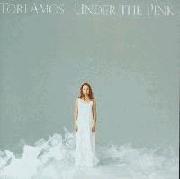
Much of "Little Earthquakes" is a record of rebellion, but never for rebellions' sake. The album cover shows an old crate that traps Tori inside of it, suffocating her from all sides, with the only way out of it going directly through to the audience. Tori doesn't pick fights or come in with an antagonistic attitude, but when the world compresses all around her, the only choices left are to claw herself out or stay trapped inside forever.
But what comprises the box that seals her in?
"I wanna punch the faces of those beautiful boys,
Those Christian boys,
So you can make me cum, it doesn't make you Jesus"
"Years go by, if I'm stripped of my beauty,
And the orange clouds raining in my head;
Years go by, will I choke on my tears,
Till finally there is nothing left"
"Little Earthquakes" is as clear cut of a feminist, anti-patriarchal mission statement as has ever been committed to wax. This is nothing inherently novel or special for a woman singer-songwriter, but no artist I've listened to has conveyed so well the withering cumulative rot of patriarchal institutions upon their spirit and psyche as chillingly, in ways both banal and unspeakably horrific. "Little Earthquakes" is a work of art told from the perspective of the female gaze, where the male gaze always lurks around the periphery, coated in a faceless dark aura that tries ceaselessly to slither its wispy tendrils into the center frame. In the least offensive cases, the men in Tori's life fail to communicate with or understand her. "China" is a longing ballad about trying to connect with a partner that is mentally distant from her affections, and "Tear in Your Hand" is all about her self worth actualizing after a breakup from a partner that never truly saw her for who she was.
In far worse cases, she is controlled and relegated to feeling like a silent accessory, like in "Girl" and "Silent all these Years"; an object that must not inconvenience those around her. These songs detail her desire to have her own voice, her own identity, before the world jades her enough to where she becomes just another willingly complacent submissive. As a woman in her late twenties who had worked tirelessly on her craft from all the way back in early childhood to little avail, you can feel the noose slowly tightening around her on so many tracks. "Little Earthquakes" is a confident record, but also a desperate one; (yet another dichotomy.)
These dark borders also create some very uneasy horror elements littered across the album. "Leather" is a more slight, slinky track about questioning her heart's internal compass of desire and lust as a substitute and facade for a more truthful human connection, but the whole track creaks with the unsettling feeling of being watched. "Precious Things" opens with a series of rapid, breathy sounds and a piano riff that feels lifted right out of a Halloween film; like she is being stalked deep into the cold night by some unholy force hot on her heels. Perhaps most memorably is the occasional sprinkling of masculine background vocals, almost always in blink-and-you'll-miss-them bursts, that always present as sinister echoes of Tori's own words; prior traumas that, like the boogeyman, can't seem to die. "Sit in a chair and be good now", a voice tells her on "Girl", trying to cast her back to a pit of supplication. On the final title track, when she screams out "Give me life, give me pain, give me myself again", the other deep, dark voices around her practically try to drag her down into the depths of hell with them as she claws towards the heavens for air. It's the kind of unsettling, under the skin feeling I almost never see in any music, let alone anything of this genre.
Nothing comes close in sheer horror to "Me and a Gun", though. The acapella retelling of the night where she was raped and barely escaped with her life is almost too physically difficult to listen to. With nothing between the listener and Tori's voice to retreat to, the song freezes time for over three minutes and makes the opening notes of the following title track, (which is itself a heavy track in its own right), a welcome sigh of relief. And her recounting of her disassociation during the vile event; her mind going to thoughts of Jesus and Barbados and soft Carolina biscuits; is somehow even more haunting than the more graphic details she describes happening to her in reality. Even after all these years of listening to "Little Earthquakes", it remains a difficult listen that I have to consider skipping unless I'm in the proper headspace to experience it.
Still, as sobering as all this is, patriarchal institutions comprise many forms and corrode from many angles:
"I know a cat named Easter he says will you ever learn,
You're just an empty cage girl if you kill the bird"
"The sun is getting dim,
Will we pay for who we've been?"
I mentioned earlier that Tori's father was a Methodist preacher when she was growing up, (and remained in that profession even as she acquired stardom.) Before going further, I do want to note that everything I have read up on seems to indicate that Tori and her father had a loving, strong relationship, (and the assumption of this bond is solidified by listening to the song "Winter", as tender as any song on this record.) That said, the scars of religious guilt are clear and deep across "Little Earthquakes", and Tori grew up in an environment where Christian values were upheld so tightly that her older brother had to sneak her secular music to listen to outside of her father's watchful eye. As Tori grew older her beliefs strayed further from the church and while she remains spiritual, her perspective always eschewed the more ordered, controlled side of organized religion that she grew up with.
The opening track "Crucify" is one of the most striking expressions of being crushed underneath religious guilt, and the desperation to break free of its doctrines and their mental and spiritual hold. I imagine she tried for much of her early life to be the good, prototypical Christian girl, but that only lead to feeling shame for living her life by her own truth and agency. "Crucify" is the sound of a woman on the precipice between choosing to live her life as a martyr, relinquishing her own happiness and self worth to fit into the dogma she was born into, or choosing to forego her guilt and self laceration to live true to herself, even if a small part of her will always wonder if that road spirals downwards into damnation.
I realize that there are some that might take issue with my assertion of the Christian faith as an extension of patriarchy, but while I acknowledge the heavy burden of religious conflict affects any who have been indoctrinated into its teachings and grows to question them in different ways, its clearly another major institution where the role of women is segregated and often minimized in relation to their male counterparts. God and Jesus are always referred to in irrefutably masculine terms, almost all of the modern authority figures within the church are men, and women are often voiceless in these communities or otherwise taught that their life duties are to serve the men in their life.
Just another cage that Tori had to break out of. But alas, even in an ideal world without these unfair obstacles, some dark horizons will always remain inevitable for all.
"I tell you that I'll always want you near,
You say things change my dear..."
"Go go go go now,
Out of the nest it's time,
Go go go now circus girl,
Without a safety net"
As much as "Little Earthquakes" is about evolving past trauma and societal restrictions, it is also an album about growing up; the anxieties of becoming a self sufficient adult without a compass or road map, and the nostalgic look back at the simplistic purity of childhood that one can never regain. For Tori, this often comes in the form of openly processing her own sexual identity and self worth, (as alluded to on tracks we've already brushed across), but these meditations on youth vs the uncertainties of adulthood are displayed most poignantly in "Winter" and "Mother"; two standout tracks that each center around conversations with a parental figure.
"Winter" evokes the feeling of its namesake, with the keys of the piano sounding like the cold dripping of icicles before eventually giving way to sweeping strings and a backing chorus that evokes a sweeping blizzard breaking against the mountainside. Tori, seemingly on her own with no clear view of what the future will hold for her, sings about the warm memories she had with her father in her youth; a steady force in her life that she could reliably turn to when things got too cold, too difficult to trek on her own. But she realizes that this comforting bedrock is itself impermanent, that one day her loving father that has always acted as her north star will himself one day fade, and she has to have the strength enough to stand on her own by the time that inevitability comes. It perfectly, beautifully, uncomfortably captures the ephemeral nature of life's security; the idea that things will always stay the same and that people won't grow old or wither and that we'll all be able to return to the safety and sanctity of our younger selves, when reality cruelly doesn't work that way. Things do, indeed, change.
But while growing up is hard, growing up as a woman is harder still.
"Mother" is the longest song on the album, and on its own terms has a case for being the most powerful and affecting, (though there is very strong competition here, too much so to make a definitive case.) It's just Tori and her piano here, singing some of the most cryptic and somber lyrics on the record. The dynamics of the piece are almost that of a whisper, to where a small gust of wind could blow the the whole thing over, but it's captivating throughout and plunges the listener into the dead of the winter night, where they will remain locked in until the relieving opening notes of "Tear in your Hand". Here Tori sings of a young gal pleading to her mother for a light to find her way back home as she is whisked away into a terrifying, uncertain future. The lyrics "He's gonna change my name" seem to indicate her becoming married and having to adjust to the internal and societal expectations that come from transitioning from identifying as a daughter and a girl, to becoming a wife and a woman; which in the patriarchal society that Tori is constantly constricted by implies the greater dissolution of oneself in order to become just a piece of the whole for the man. This is but one interpretation though, and not one I am wholly confident in due to the fact that Tori was never married by this point in her life. And while she could be narrating the perspective of an outside character she felt parallels to, the rest of her work is so unerringly personal as to give me pause to this being the key to the lock.
But irrefutably its perspective is one of youth, particularly feminine youth, looking toward a parental figure for guidance and a place to return to, because the night is dark and full of horrors. Frightened or not, the metamorphosis will take place all the same and there may not be enough breadcrumbs to trace back to where she started her journey from, and that dark vision is both terrifying and heartbreaking.
And that is where we get to this album revealing itself to being the great Greek tragedy of womanhood. Growing up and becoming your own person is frightening, challenging, awkward, confusing. Doing so as an AFAB person only amplifies these challenges in ways that Tori makes it feel like divine, unholy forces conspire against her from all around. Even as a child piano prodigy with limitless opportunity and potential, she couldn't escape the churning, inexorable vortex of it all. What power does any mere mortal possess that can equalize these injustices, these slow but crushing accumulation of unequal treatments and trials and expectations?
These Little Earthquakes that threaten to tear her into pieces.
And yet this album is not an admission of defeat, but a triumph. Because despite the world trying to crush and compact her into that tiny crate on the album cover, she absolutely blooms on this album and shows her true personality, her playfulness, mischievousness, tenderness, alongside all of the pain. After feeling silent all of these years, "Little Earthquakes" is a major coming out for one woman's singular voice. Speaking of which...
I want to pull back for a moment now and focus on Tori's virtues as a singer. Her piano playing is prodigious and her instincts at getting exactly the right notes out of it seemingly spontaneously are perhaps unparalleled in popular music, but her singing is...good. Very good, in fact. Her voice is very pretty, and she has great skill at delivering certain words and phrases in such a way to leave the precise emotional impact she's yearning for. She's also not afraid to be raw, screaming at points in rasps and ragged breaths that would make it just edgy enough to where you wouldn't hear it at your local supermarket. I would argue that her voice alone isn't great or distinct enough to be a defining feature of this record, and weirder still, I think that is to "Little Earthquakes" ultimate advantage.
She doesn't have the bellowing, powerful pipes of Adele or Mariah Carey. She doesn't have the distinctive singularity of Stevie Nicks, the soulful confidence of Aretha Franklin, the sly too-cool subversiveness of Fiona Apple. Tori Amos doesn't sound like a superhero or the protagonist of a story; she sounds like an every-woman that you could hear at your local karaoke bar and think "wow that gal has a surprisingly good voice." While her music is grand and mythic and bursting larger than life can handle, Tori herself is a mortal just like the rest of us.
She's vulnerable. And while Tori is many things: a prodigy, a genius, a survivor, by all accounts a hero in her own right, she also feels like one of us; like a friend. And that's why the emotional tethers of her music resonate so powerfully with those who listen to it in the right state of mind, in the proper period of their lives. She has some of the most devoted fans I have seen in music because those who get her, really get her.
Which brings me back to the central question from the start of this review: Why is this my favorite album of all time, and what specifically do I get out of it that connects me so closely to this masterpiece?
It makes me doubly curious as I feel like I shouldn't be the kind of person that can connect so divinely to this group of songs. I'm a cis man who started listening to and loving "Little Earthquakes" in his early twenties, and now that I'm in my early thirties a decade later I love it arguably even more than I did, even as my overall fervor for music as a whole has diminished and many of the albums I once held dear have faded into the fringes of memory. It would be reductive, stupid even, to say that since I'm a cis man that I couldn't connect emotionally to songs centered around such specific feminine life experiences and perspectives, but at the same time I'll always wonder if I'm allowed to say that I love and connect with it in the same way that so many AFAB fans do. It would be like empathizing with the love a parent holds for their child; one can mentally understand the strength and severity of it, but I can't possibly comprehend that sensation in its entirety unless I were to ever have a child of my own. The effect of listening to this highly personal, confessional record; my favorite of any of them; sometimes fills me with imposter syndrome.
Perhaps this bit of distance proves a bit of a blessing in its own way, though. I remember watching the movie "Boys Don't Cry" many, many years ago. It's been so long now that I can't comment on how well the film has aged, but I know at the time I was floored and emotionally devastated by it. For those who are unfamiliar, it's a dramatization about the true story of Brandon Teena, a trans man who was tragically murdered in the early 90's. The film follows the final series of days of his life, living true to himself, and even though his actor was portrayed by a cis woman, I think it was a revolutionary film at the time of its release in humanizing trans people for an audience that, especially for that time, may have never met one or could empathize with their daily triumphs and struggles. I imagine for many cis people it would still serve as a vital, eye opening watch.
Fast forward several years, and I developed a loving, years spanning relationship with a trans man, and while this (no ***) gave me additional insight into the lives and trials of a trans person, I also quickly realized that this movie that I found so vital, so painfully important, was something that I never wanted to show my partner. What purpose could it possibly serve for him, what lessons could it possibly impart, other than as a torturous reminder of the capacity for cruelty others might direct towards him for simply existing? "Boys Don't Cry" is a film that celebrates the life of a trans person, but I don't believe this serves as its intended audience, and it's primary societal value is to serve as a perspective widener for cis people, because they inevitably will be the ones with the bulk of responsibility for creating a better world where the events of the film don't happen again.
It may be a false equivalency, but I can imagine "Little Earthquakes" could be the same. I think Tori made this album for herself alone, and many women can relate to her stories and tribulations, but for some I can see how listening to this album could be like Icarus flying too close to the sun; how thin the line of appreciation and empathy can teeter over into pain. Perhaps I should feel blessed that this album hurts me just the right amount and not an ounce more, because I can imagine how for some it could be unbearable even if it can prove cathartic, like tearing off a scab that is too fused to the skin. For AFAB people, I can imagine "Little Earthquakes" is validating. All I know is that for me, it was life changing.
And while I'll never have the same connection to this album that Tori intended, by own emotional attachments are just as valid and impossible to articulate. So many tiny moments of this album break my heart, cleanse my soul, or otherwise rewrite my brain chemistry altogether. The sparse, crying piano notes on the title track when she sings "Doesn't take much to rip us into pieces"; the feeling of hopeless yearning for something missing in my own life on "Crucify" when she sings "I've been looking for a savior in these dirty streets, looking for a savior beneath these dirty sheets"; the moment on "Tear in Your Hand" where all the instruments die down, only to come back in full force when she sings "Caught a ride with the moon". These moments take me to my own constructed worlds to bask in and process, like the invented chapel at the beginning of this review. I worry that if Tori were to read this review she might think me mad for conjuring up such a mental landscape for one of her songs in my own mind palace, but then again, maybe it would make all the sense in the world to her after all.
"Little Earthquakes" is my favorite album of all time because no other set of songs are consistently this well composed and enjoyable to listen to, have this much of a strong emotional impact on me, challenge my perspective and place in the world, and connect me to the honest portrait of the artist at its core, all in unison, all of the time. And I imagine I will return to its world year after year, wading through the lucid dream world between surrealism and reality where violins fill with water, Judy Garland takes Buddha by the hand, and I'll dance with vampires until dawn, because all the world is all I am.